Date:
November 4 + 5, 2026
Place:
HIFMB
Im Technologiepark 5
26129 Oldenburg
Germany
Understanding the relationship between people and the management of our seas and oceans has grown into a significant area of research at HIFMB. Would you like to learn more about our work on marine governance, management, and policy, and hear a leading international scholar discuss the key issues shaping the field today?
Please register and join us for our second Marine Social Science Lecture on “Infrastructuring.”
You can also find information about our previous Marine Social Science Lecture here.
Keynote Speaker
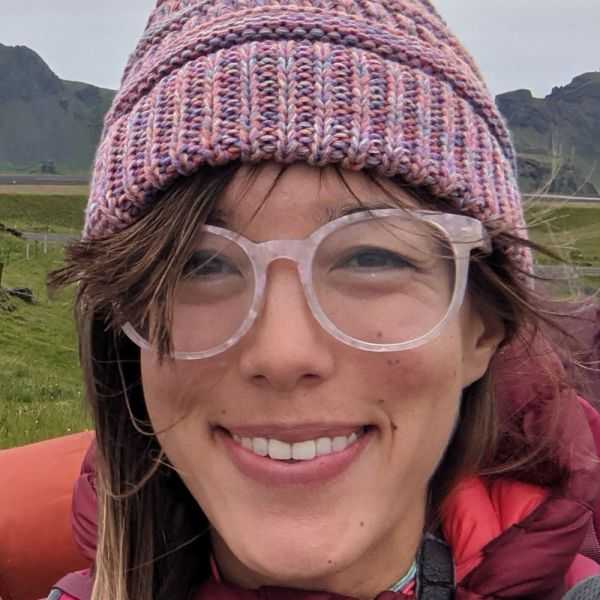
Associate Prof. Mia Bennett, political geographer at the University of Washington
Critical remote sensing in the new space era: Navigating power, politics, and knowledge from above and below
Abstract
Spaceborne and aerial instruments like satellites and drones are collecting a quickly growing amount of imagery. This remotely sensed data is used in a vast number of fields ranging from daily life to news reporting, agriculture, and military and intelligence operations, amplifying the political, societal, and economic importance of remote sensing. The expanding dissemination and application of remotely sensed imagery, especially satellite imagery, had bolstered its authority and acceptance. So, too, has satellite imagery’s increasing spatial, spectral, and temporal resolution, with US company Vantor now collecting high-resolution (30-centimeter) imagery of certain locations on Earth up to 15 times a day. This commercial dataset exemplifies the rise of commercial firms within the satellite industry, which are challenging the monopoly on the spaceborne technology held by governments during the Space Race and Cold War. Since the 1990s, governments like the U.S. have supported the commercialization of satellite imagery, yet they must navigate the tension between promoting technological innovation and competition while attempting to ensure control over data that is easily weaponizable, particularly during conflicts, whether for identifying targets or for spreading misinformation. As satellite data shifts towards becoming a public good, it is also growing in epistemic power. This risks undercutting the importance of knowledge obtained from the ground, whether field observations made by scientists or Indigenous knowledge. Particularly in regions where conditions and remoteness make local access challenging, like the Arctic and the oceans, a wide range of stakeholders from scientists to non-profit organizations, Indigenous Peoples’ organizations, commercial firms, governments, and militaries are increasingly embracing remote sensing. Taken together, all of these trends make what is called critical remote sensing – a subfield that emphasizes attention to the data’s political and economic contexts while using it in ways that expose inequalities, engage other forms of knowledge, and empower marginalized communities – particularly timely and urgent.
Mia Bennett is Associate Professor in the Department of Geography at the University of Washington. She is a political geographer specializing in the geopolitics of infrastructure and critical remote sensing. Her interdisciplinary background combines geography, ethnographic fieldwork, geospatial analysis, cartography, and remote sensing. Mia’s teaching and research critically examine: (1) how infrastructure and technologies reshape regions and global systems of power, and (2) the social, political, and ethical dimensions of satellite imagery and geospatial data in environmental governance and territorial change. Her work is especially concerned with Arctic geopolitics, Indigenous sovereignty, and the ways infrastructure and spatial technologies shape northern regions and outer space.
Prior to joining the University of Washington, Mia taught in the Department of Geography and the School of Modern Languages and Cultures (China Studies Programme) at the University of Hong Kong. She has also collaborated with international research initiatives focused on Arctic governance, sustainability, and geospatial technologies, including projects supported by the National Science Foundation, the Fulbright Arctic Initiative, and the British Academy. She is the founder and editor of Cryopolitics, a long-running research blog focused on Arctic geopolitics and infrastructure. She also recently published the book Unfrozen: The Fight for the Future of the Arctic, co-authored with Klaus Dodds, which examines the intertwined challenges of climate change and geopolitical competition in the Arctic.
She holds a PhD in Geography from the University of California, Los Angeles, an MPhil in Polar Studies from the University of Cambridge, and a BA in Political Science and European Studies from UCLA. For more information and links to publications and media, please see https://geography.washington.edu/people/mia-bennett.
Programme
| November 4 | Closed day: only for registered participants |
| 14:00 – 14:30 | Reception |
| 14:30 – 15:45 | Fishbowl Discussion (Marine Infrastructure) |
| 15:45 – 16:15 | Coffee & Cake |
| 16:15 – 17:45 | Fireside chat with guest speaker Associate Professor Mia Bennett |
| November 5 | Marine Social Science Lecture |
| 10:30 – 11:00 | Reception |
| 11:00 – 11:15 | Welcome & Introduction |
| 11:15 – 12:45 | Keynote Lecture by Mia Bennett (hybrid) |
| 13:00 – 14:00 | Lunch |
| 14:00 – 15:30 | Methods Workshop (attendance is optional) How do we do our research? A reflection by the Marine Social Scientists at HIFMB |
MSSL
The Marine Social Science Lecture (MSSL) is a place of belonging.
The Marine Social Scientist at HIFMB are guided by an ethics of care, recognising the importance of empathy, compassion, and responsibility in our interactions with one another. The same applies to the Marine Social Science Lecture (MSSL). We strive to create an inclusive and supportive environment where everyone feels valued and respected. To achieve this, we ask all participants, including attendees, speakers, organisers, and staf, to adhere to the following guidelines.
Kindness, Respect and Solidarity
Treat everyone with kindness and respect. Acknowledge and consider the viewpoints, experiences, and feelings of others. Always think and reflect on your contributions. Be aware of your position, privileges and perspectives. Stand with (and up) in solidarity for those who are underrepresented due to ongoing, structural inequalities in the academy.
Inclusive Language and Behaviour
Use inclusive language, avoid assumptions and be thoughtful in how you address others. Derogatory or discriminatory remarks based on any facet of identity and intersections of these, are absolutely and unequivocally unacceptable.
Wellbeing, safety and support
We prioritize the wellbeing and safety of all attendees and aim to support and make comfortable everyone who comes along. We are against harassment, discrimination, or inappropriate behaviour We want the MSSL to be a safe space. Any issues can and should be reported to the event organisers who are committed to addressing any matters quickly and sensitively. Members of our HIFMB ‘Persons of Trust’ Team will also be available during the event. We will also provide a ‘quiet zone’.
Environmental Sustainability
Consider the environmental impact of the event and minimize waste and resource consumption whenever possible.
Thank you for your commitment to upholding these values and contributing to a respectful and inclusive environment.
If you have any questions, please contact us at: marine.governance@hifmb.de