From tooth fish to food webs, from molecular genetic tools to underwater acoustics: dive into our current research
Topics
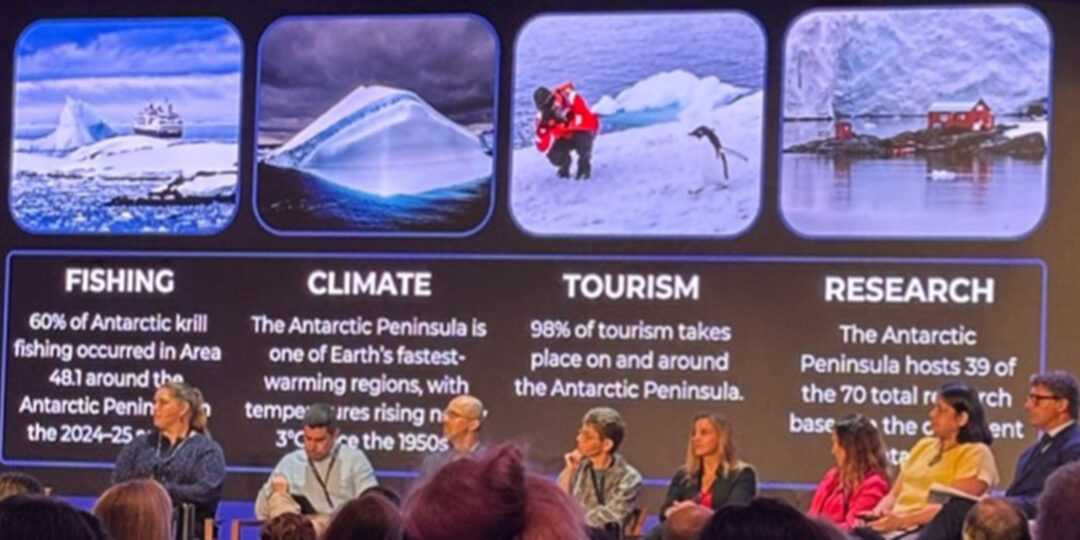
From the Heroic Era to the Krill Party: Past, Present and Future Dilemmas at the Scientific Committee on Antarctic Research (SCAR)
In early August, the 1400 Antarctic experts descended on the Norwegian capital of Oslo for the 12th Scientific Committee on Antarctic Research (SCAR) Open Science Conference, held between August 8-19. Every two years, the SCAR conference provides a platform for the Antarctic research community to present ongoing and recent studies, network, and discuss research and conservation …
Did you know?
Unicellular plankton covers a size range that is comparable to the size difference between a small fish and a city like Oldenburg.

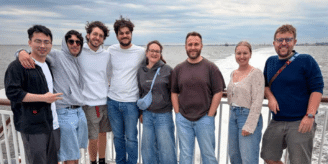
Photosymbiosis on our Doorstep: Lab Retreat to Helgoland
Our group has grown rapidly over the last year. Expanding from two to eleven members is exciting, but now that we are officially a “group” it was time for our first lab retreat. The HIFMB Photosymbiosis Focus Group therefore packed up our collection buckets and set sail for Germany’s only true offshore island: Helgoland.
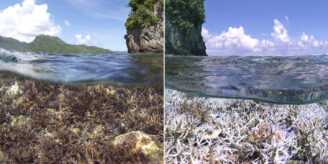
Tipping Points: The Tip of the Issue
We began our journey in 2025 as the HIPP Cohort “Making Sense of Tipping Points for Biodiversity: Ecosystem and Societal Perspectives” as a group of researchers working from diverse perspectives including ecology, mathematics and human geography. The prominent use of the term ‘tipping’ in environmental sciences and policy considerations has been at the heart of our collective discussions and we argue that it warrants deeper consideration. Here, we share some thoughts on what this term means and promises within our various fields and for public environmental debate at large.
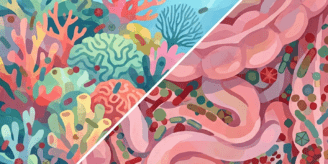
From Coral Reefs to Human Guts: Stress is Stress
What makes human guts and coral reefs similar? They have no shared microbial taxa, shared host(s), or timescales, but they are both extremely complex ecosystems that offer the same microbial readouts when they are disturbed, and that has implications on where we should NOT look for answers.

The Idea Behind HUMAN PROGRESS (HIPP27 Call)
The HIPP27 HUMAN PROGRESS Call explores how insights from the humanities and social sciences can contribute to research in the natural sciences and help address complex environmental challenges.

Rossella Alba Appointed Junior Professor of Marine Policy and Management
Dr. Rossella Alba has joined the HIFMB as Junior Professor of Marine Policy and Management. The professorship is a joint appointment with the Alfred Wegener Institute and the University of Oldenburg. She comes to HIFMB from Humboldt-Universität zu Berlin, where she was a postdoctoral researcher, and holds a PhD in human geography from Trier University.
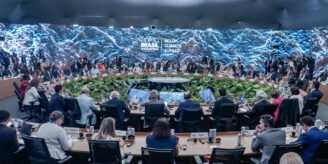
HIFMB at COP30 – BioAgora: Bringing Ocean Science to Policy
At COP30 in Belém, Brazil, Dr. Josie Antonucci di Carvalho from the Helmholtz Institute for Functional Marine Biodiversity (HIFMB) will highlight Europe’s efforts to bridge science and policy for marine biodiversity.