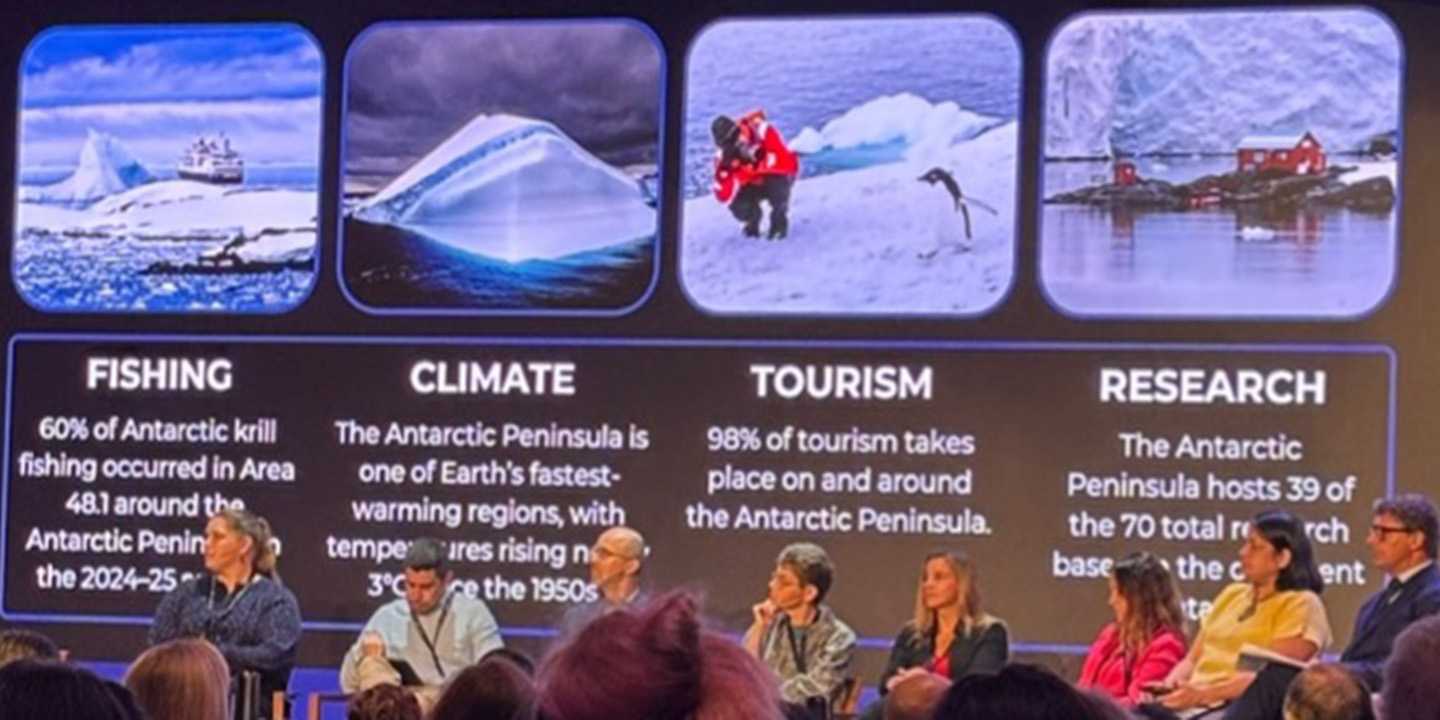
In early August, the 1400 Antarctic experts descended on the Norwegian capital of Oslo for the 12th Scientific Committee on Antarctic Research (SCAR) Open Science Conference, held between August 8-19. Every two years, the SCAR conference provides a platform for the Antarctic research community to present ongoing and recent studies, network, and discuss research and conservation infrastructure and policy. With approximately 1400 registered participants, the conference boasted a wide-ranging program spanning Antarctica’s history to its future. In this conference summary, we provide a short overview of the conference, followed by snapshots of SCAR’s exploration of the past, present and future of Antarctica and the Southern Ocean.
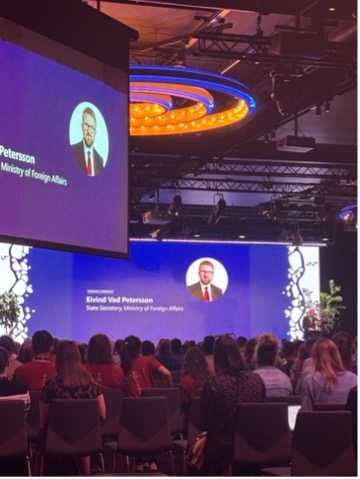
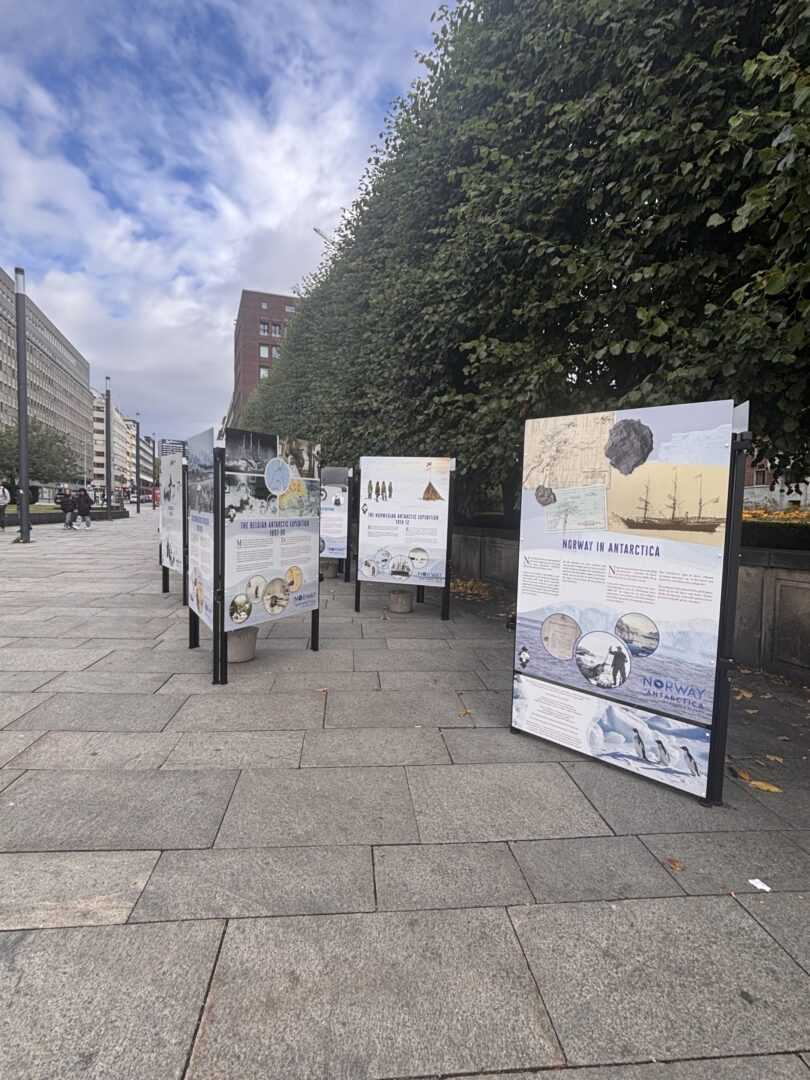
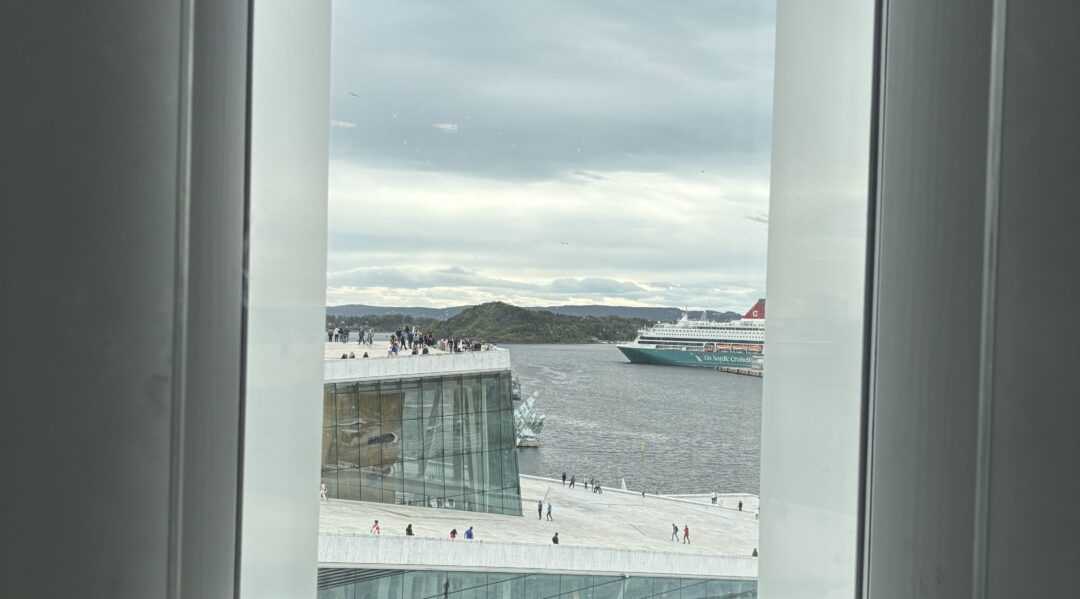
Hosted by the Norwegian Polar Institute in cooperation with an international organising team, SCAR veterans noted that the Scandinavian state asserted its role and contributions to the polar regions – more emphatically than other host countries in the past. From the welcome address by Norwegian State Secretary Eivind Vad Petersson during the conference’s opening ceremony and by Oslo’s Anne Lindboe at the city hall reception, to an exhibit of Norway’s Antarctic expeditions, and a daily buffet of cinnamon buns – Norway’s (culinary) achievements were lauded throughout the conference.

The enormous breadth of topics SCAR hosts must have generated the organising committee a huge amount of both freedom and headaches for organising the daily plenaries and mini-symposiums. The plenary talks varied from complex modelling of ice physics, impressively broken down into accessible summaries; a 60-year history of baffling tourism in Antarctica; in-depth geological discoveries; and finishing off with the David Walton Antarctic Science Lecture, which showcased the unlocking of crucial biodiversity distribution and connectivity through genomic technologies. The conference committee did a great job selecting engaging, talented speakers who made their complex work accessible to an incredibly wide range of scientific minds.
Each plenary session was followed by a mini-symposium with a panel of scientists from multiple disciplines and career stages. Topics ranged from getting affairs in order for the upcoming International Polar Year (IPY-5); concern over invasive species; the need for cross-disciplinary science between the Antarctic and the Southern Ocean; and insights into how the science-policy tries to develop protective strategies, such as marine protected areas. Some of these discussions had high potential for juicy insights and debates, but for the most part we were shown an impressive level of diplomacy, though some attendees voiced discontent with the repetition of time-tested opaque remarks, leaving pregnant pauses for those in the know to mentally fill the gap of the (geo-)political crisis implied by the respective speaker, in lieu of concrete statements.
SCAR also provided a surprising ratio of workshops to attendees (42 across 8 days!) and 38 business meetings, illustrating the importance of this Antarctic conference in bringing together scientists, stakeholders, and experts from around the world to capitalise on much of the Antarctic research population being in one place.
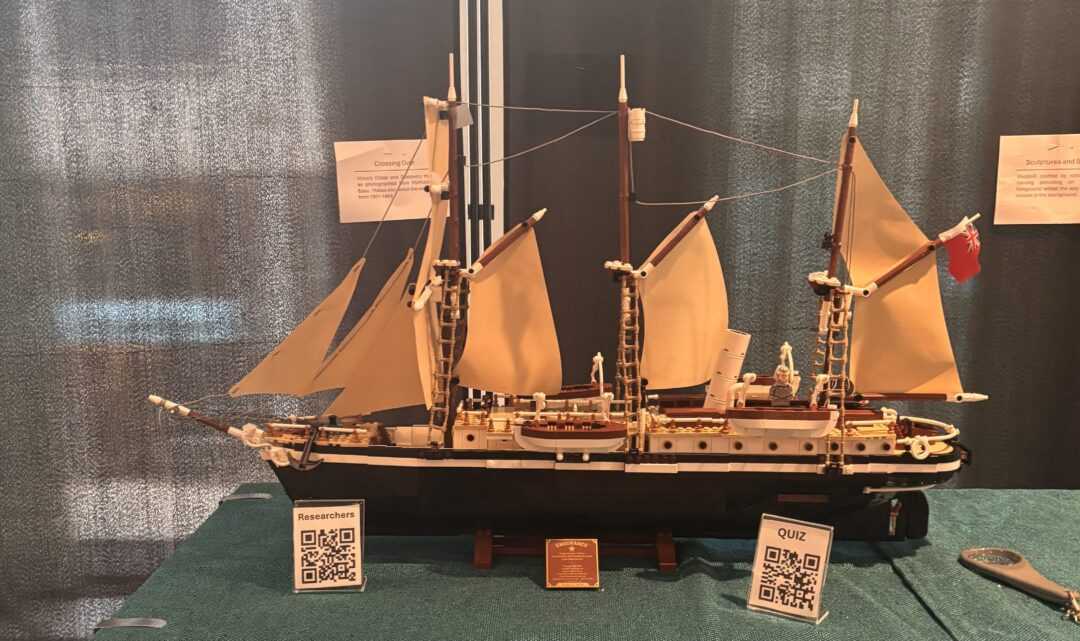
Past: Navigating the Heroic Era
At every corner of the SCAR conference, the subject of expeditions was hotly debated, from the National Science Foundation explaining to researchers why insufficient icebreaker availability means longer and fewer trips to the Southern Ocean to countless mentions of Ernest Shakelton’s voyages, including playful engagement with historic expeditions, such as the display of the Endurance made of LEGO. Shakelton and his contemporaries were also well-represented in the research talks, with contributions stretching from history and archaeology to photography, design, and even video gaming.
Talks particularly focused on the so-called “heroic era,” which refers to a period of technological, geographic and scientific innovation driving Antarctic expeditions in the late 19th and early 20th century. Conference presenters made a point to highlight the fraught colonial legacies entangled with many of the journeys associated with this era, as well as the unnamed or lesser-known characters working with and for the iconic explorers. From Ursula Rack shining a light on the diplomatic efforts behind the scenes of polar expeditions to Leslie Carol Roberts’ captivating presentation on “Lessons in Orientation” based on the journals of Frank Worsley, Captain of the Endurance.
Present: Doomsday Tourism and Krill Parties
Although there has been a growing awareness of the issues building around tourism in Antarctica, it was still shocking to hear about its development from experts, with tourism related problems seemingly infiltrating most conference sessions. Not only are cruise ships dropping off their tourists on the Western Antarctic Peninsular (one of the most biologically fragile areas of the continent) to dig holes and roll around in the sand (yes there was a photo), tourists were also recorded climbing up ice walls and wandering within penguin colonies; photos of the amount of plastic and rubbish being left behind were heartbreaking. Maps also showed whale distribution almost perfectly aligned with the heaviest corridors of cruise ship routes. We even heard of daily summer flights into the Trans Antarctic Mountains for rich mountaineers to come and summit.

It’s unsurprising that Antarctic guides are quitting their jobs out of despair over the lack of environment care shown by the tourist industry. Tourism levels seem to be increasing quickly, as “doomsday tourists” race to see this delicate continent before it’s ruined. Unfortunately, there didn’t seem to be any solutions on the horizon, given the sheer number of tour operators and gateway countries offering tours. However, tourism scholars and representatives of the International Association of Antarctic Tour Operators (IAATO) did outline some of the operational principles and guidelines introduced to navigate and address these tensions.
But what better way to shake off all the doom than with National Geographic and a krill party?! On the evening of World Krill Day, nonetheless, there was a panel presentation by National Geographic Explorers (turns out that if you get a National Geographic science scholarship, you get the title of National Geographic Explorer!), showcasing their cross-discipline cohort expedition to the Southern Ocean. Not only was it fun to watch such passionate and excited scientists present their adventure, but it was also fantastic to see that the team of 5 scientists, each from a different discipline of science, were able to support each other so well that new discoveries of deep-sea vents and krill habitats were made.
Following this was the premiere of a brand new film created by BAFTA Award-winning filmmaker Bertie Gregory, which fittingly heavily featured krill! The film celebrated the incredible feat the world managed in protecting whales by banning whale hunting around Antarctica, and showed footage of hundreds of fin whales feeding together in the Southern Ocean, a sight not seen for hundreds of years. The second half of the documentary was a plea for us to come together again and protect their food source: krill. If we’ve done it once, surely we can do it again.
Future: Future scenarios, Horizon Scans, and IPY
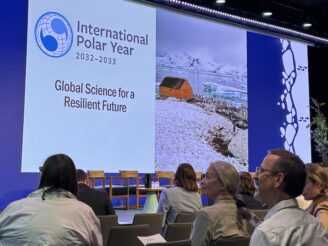
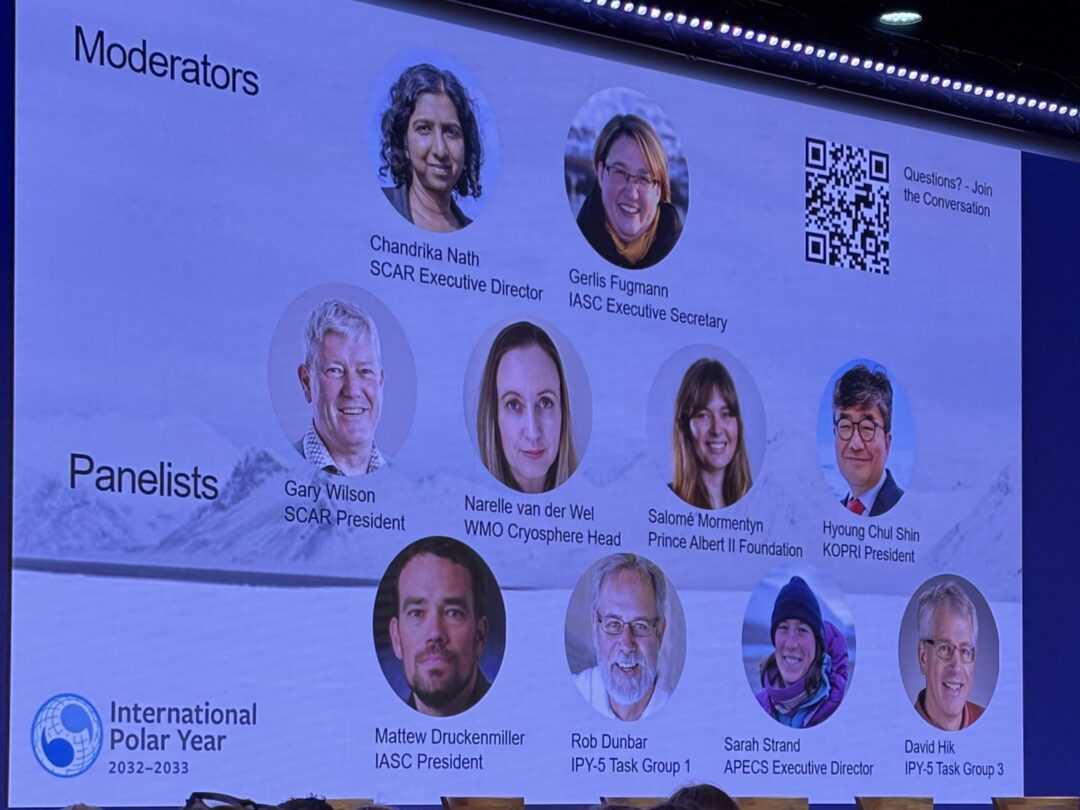
The official year’s conference theme “Diving into Antarctic science – making waves for the future”, with much emphasis on future projections as well as initiatives for future research collaboration. Particularly mentions of the upcoming International Polar Year (IPY) 2032-33 and related preparations featured heavily across the entire conference, with mentions in every other session, a mini-symposium and a town hall. The joint 2030 POLAR IASC-SCAR Conference in South Korea, with the theme “Frozen Frontiers, Shared Futures: Collaborations to Forge Our Planet’s Tomorrow,” was also featured, including a workshop organised by Hyoung Chul Shin, President of the Korean Polar Research Institute (KOPRI), which will host the conference.
IPYs are large-scale international initiatives that aim to foster research collaborations across borders, stimulate scientific advancement, synthesise findings, and provide a platform for stocktaking and agenda-setting for polar research. The upcoming IPY will be the fifth of its kind, following IPY I (1882-83), II (1932-33), III (1957-58), IV (2007-8). The third IPY during the Cold War coincided with the International Geophysical Year and is often credited with laying the groundwork for the establishment of the Antarctic Treaty System.
With current political conditions frequently likened to the Cold War era, and geopolitical pressures challenging research collaboration, infrastructure, and the implementation of scientific advice frequently discussed by SCAR attendees, hopes for the IPY-5 are high. Not to mention the ongoing environmental changes that prompted the IPY; as SCAR President Gary Wilson noted in his opening address, “the planet will have changed significantly by 2032/33”. So, although 2032 may sound far off in the future, SCAR participants stressed the importance of future-oriented planning and the urgency of preparing for the fifth IPY. This long-term perspective was said to be crucial to ensure the meaningful inclusion of Early Career Researchers (ECRs) and Indigenous communities, as well as conducting horizon scans, establishing infrastructure and collaborations and more.
Within the oceanography realm, sessions on ocean and ice physics seemed to be focused on the pains, but necessity, of modelling ice sheet cavities to develop much more accurate circulation models. These improvements are vital for accurately forcasting changes to ice sheet melt and the impact of additional fresh water will make to Southern Ocean circulation, and therefore global circulation. An example of this is the Antarctic Circumpolar Current (ACC), arguably one of the most important currents globally. Although the ACC hasn’t changed much historically, improved modelling of meltwater impact shows that by 2050 the ACC will decline by 20%, with currently unknown but likely negative consequences for the rest of global circulation.
Conclusion
In summary, from heroic-era expeditions to doomsday tourism, krill conservation and preparations for IPY-5, the SCAR conference revealed an Antarctic research community navigating profound change. The conference showcased the value of international and interdisciplinary collaboration, while also exposing the political and practical constraints facing Antarctic science and conservation.
Katie Lee & Charlotte Gehrke
The authors are postdoctoral researchers in the 2026 HIFMB Integrative Postdoc Pool (HIPP) on “The Dilemma of the Southern Ocean: Ecosystems, Sustainability and Competing Interests at the Edge of the World.” Katie is examining if and how marine protected areas (MPAs) in the Southern Ocean are linked, and Charlotte is investigating how geopolitics, research, and governance transfer are mobilised in the management of the Southern Ocean.