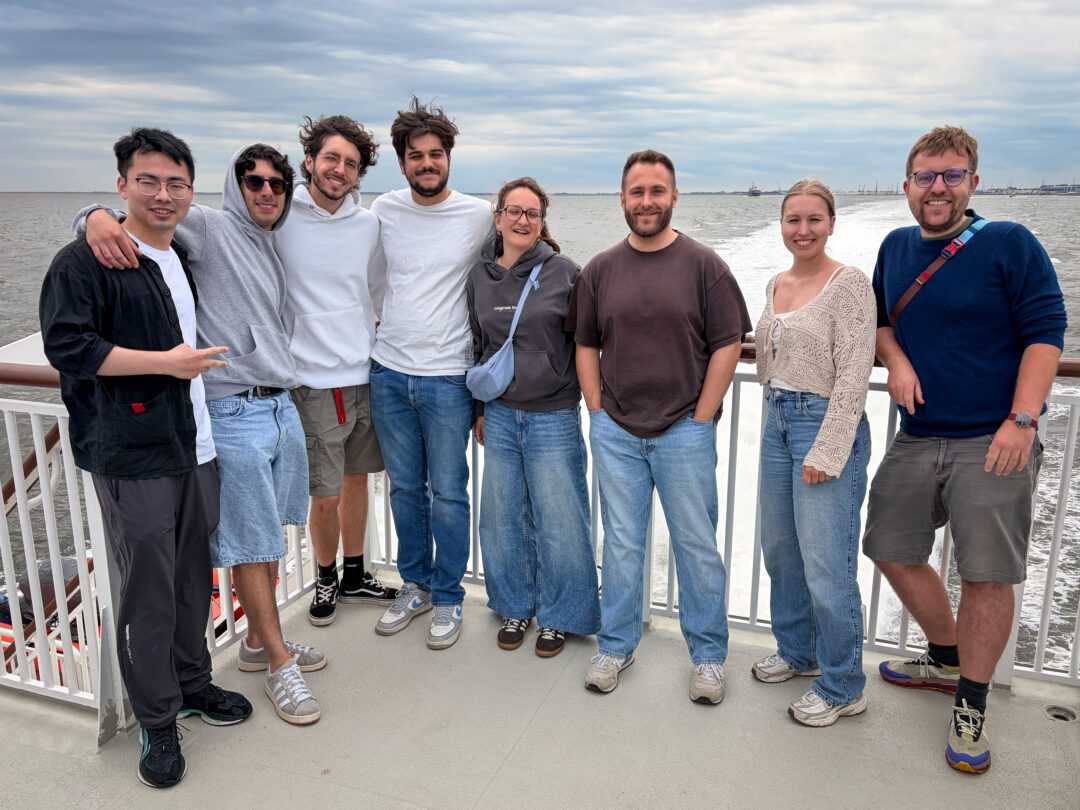
Our group has grown rapidly over the last year. Expanding from two to eleven
members is exciting, but now that we are officially a “group” it was time for our first lab retreat. From June 30th to July 2nd (technically July 3rd, but more on the weather
later), the HIFMB Photosymbiosis Focus Group therefore packed up our collection
buckets and set sail for Germany’s only true offshore island: Helgoland. Isolating
ourselves out there had three goals: connect as a team, develop a shared research
mission, and hunt down new photosymbiotic organisms for our ever-growing culture
collection in Oldenburg.
Why Helgoland?
Mention “photosymbiosis” and most people picture a coral reef in clear tropical water.
Yet these partnerships between heterotrophic hosts and their photosynthetic
symbionts are far more widespread and diverse than that stereotype suggests.
We want to understand how photosymbioses work and why they have evolved
repeatedly across the tree of life. This requires comparing commonalities and
differences across diverse symbioses to identify the functional core of these
interactions. We therefore keep taxonomically and functionally distinct associations
side by side in our Oldenburg culture collection: the more varied the partnerships, the
better our chances of finding universal principles rather than quirks of a single
organism.
With its rugged rocky intertidal and cold, nutrient-rich waters, Helgoland was the
perfect place to make the point. Photosymbioses are not just tropical marvels; they
thrive right on our doorstep.
Two excursions, two new lab members
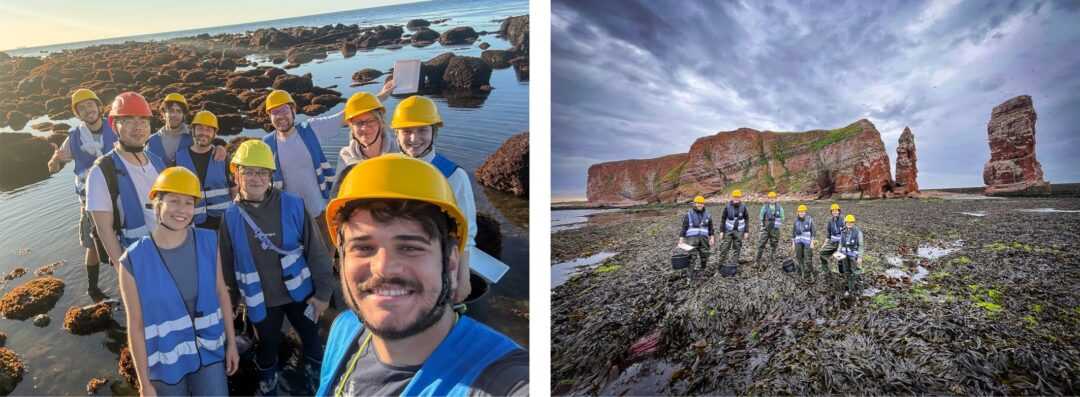
Helgoland is surrounded by the “Felswatt”, an intertidal hard-bottom area that is
accessible only at low tide. For us, this was the perfect hunting ground, and our stay
offered two suitable tides for field trips. We had two target species in mind: the
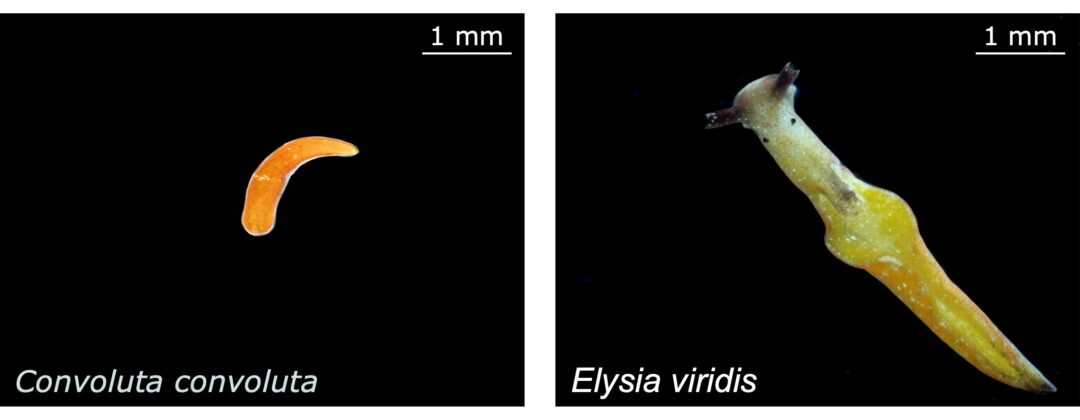
nudibranch Elysia viridis and the acoel (flat)worm Convoluta convoluta.
On the first trip, we scouted the south of the island. Under the skeptical eyes of the
resident grey seals, we searched every rock pool and combed through the algae until
we found them: not one but hundreds of Elysia viridis, feeding on green algae
everywhere. This solar-powered sea slug is famous for kleptoplasty, the ability to steal chloroplasts from the algae it eats and keep them photosynthesizing in its own tissues for weeks. It is a fascinating mechanism, and one that adds a completely new
functional aspect of symbiosis to our collection.
That left one target species for the second trip to the north of the island the following morning. Wading through chest-deep water in front of the Lange Anna, the iconic sea stack Helgoland is famous for, we struck gold again: Convoluta convoluta, an acoel worm that harbors diatoms as photosynthetic partners. This is our first diatom-bearing photosymbiosis in culture and opens up a new taxonomic branch for our comparative work. With both species in our buckets, the early starts, the smell of rotting algae, and the occasional foot wedged in a slippery rock crevice were quickly forgotten.
Beyond the Felswatt
While fieldwork was a highlight, the retreat was also about developing and expanding
our scientific mission as a group. None of this would have worked without the Alfred
Wegener Institute (AWI), whose hospitality let us stay at their guesthouse, hold our
research talks in their meeting rooms, and process and maintain our freshly collected
animals in their lab facilities.
Our meetings were long, but also genuinely fun. Members presented their past,
current, and future projects, which let us discuss where these connect and where to
focus next. Just as valuable as the science itself was reflecting on how we actually
work together as a team. For a group that has grown so rapidly, this was probably the
most important outcome of the retreat.
But we did not only work hard, we also took the time to enjoy what the island has to
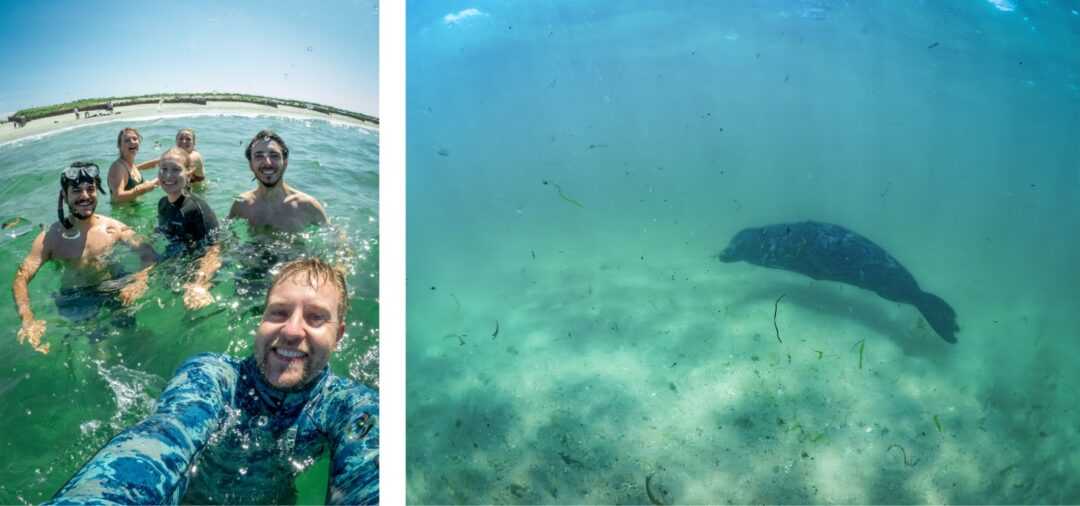
offer. We went birdwatching at the cliffside colonies of breeding gannets and
guillemots, and ventured to the neighboring island “Düne” to observe the resident grey seals. A few brave souls even suited up and swam alongside these curious marine mammals for a rare underwater view. For meals, we ate together in the guesthouse kitchen, and it turns out that nothing bonds a group quite like a ruined pot of hopelessly over-salted pasta. Sharing these unscripted hours, is what creates the community we all cherish.
A stormy departure
We had planned a final day of discussions, but the North Sea had other ideas. As a
severe storm rolled in, all ferries back to the mainland for our scheduled departure day were canceled. To avoid getting stranded, we packed up fast and caught the last boat out a day early, swapping our final lab work and meetings for a high-speed repacking scramble.
Despite the chaotic finale, the retreat was a success. We returned to Oldenburg with
two new cultures, a clearer sense of our shared scientific direction, and plenty of field
stories. We are already counting down to next year’s expedition.