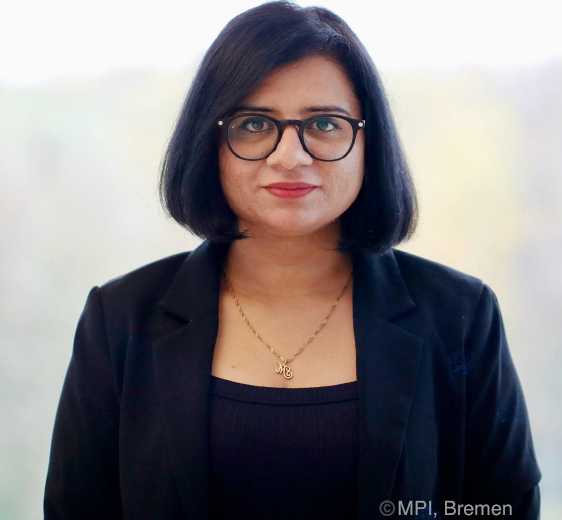
Vita
2025 – today
Independent Researcher (DFG Fellow), ICBM, Carl von Ossietzky University of Oldenburg, Oldenburg, Germany
2018 – 2025
Research Scientist, Max Planck Institute for Marine Microbiology, Bremen, Germany
2017
Guest Faculty for Molecular Biology, Panjab University, Chandigarh, India (July-December)
2012 – 2018
Doctor of Philosophy (Ph.D.) in Microbial Genomics and Molecular Biology (CSIR-Institute of Microbial Technology, Chandigarh, India)
Research Interests
My research focuses on understanding how microbes drive the flow of carbon across different trophic levels in marine ecosystems with a special focus on the North Sea. I’m interested in exploring how microbial communities interact, and how these interactions influence biogeochemical cycles in the ocean.
In collaboration with international teams, I also study the rapidly changing ecosystems of the Western Antarctic Peninsula. There, we investigate how bacterioplankton communities adapt to shifting environmental conditions caused by climate change and glacier melting, and what this means for carbon storage and nutrient balance in polar waters.
With my DFG-funded project WindFluX, I’m exploring a new and exciting question:
How do offshore wind farms (OWFs) affect the invisible microbial world of the ocean?
As offshore wind energy becomes a key part of the sustainable blue economy, understanding its broader ecological effects is crucial. While the impacts of OWFs on fish and marine mammals are relatively well studied, we still know very little about how they influence planktonic life – the bacteria, phytoplankton, and zooplankton that form the foundation of the marine food web.
WindFluX aims to uncover:
- Whether microbial and plankton communities inside OWFs differ from those in surrounding waters.
- How primary productivity and the production of organic matter (DOC and DON) change in these modified environments.
- What this means for carbon cycling, ecosystem health, and nutrient dynamics in the North Sea.
Beyond data collection, the project seeks to identify early indicators of ecological stress, connect microbial traits to ecosystem function, and develop predictive models to help assess and manage the environmental footprint of offshore wind farms.