From tooth fish to food webs, from molecular genetic tools to underwater acoustics: dive into our current research
Topics
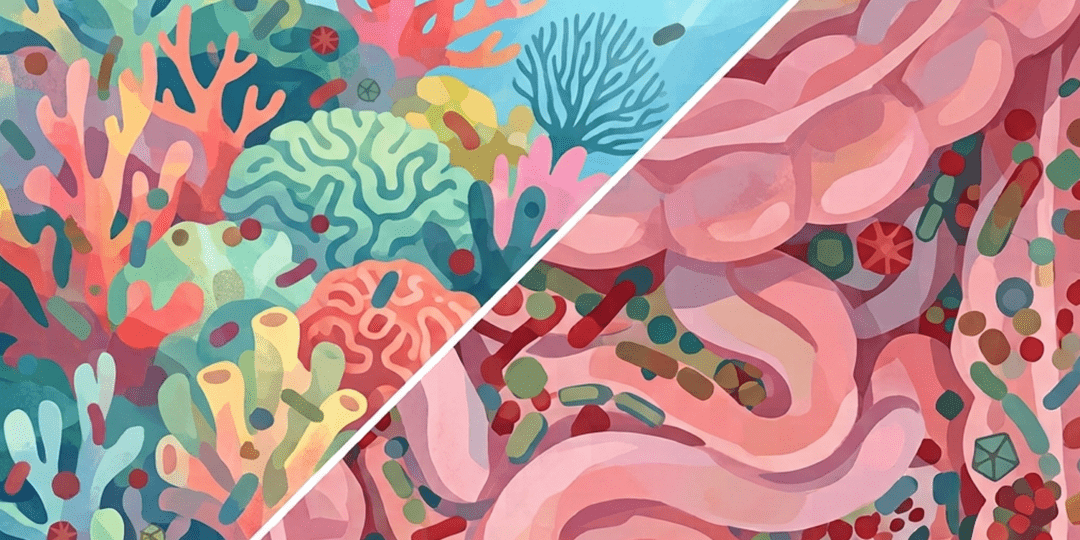
From Coral Reefs to Human Guts: Stress is Stress
What makes human guts and coral reefs similar? They have no shared microbial taxa, shared host(s), or timescales, but they are both extremely complex ecosystems that offer the same microbial readouts when they are disturbed, and that has implications on where we should NOT look for answers.
Did you know?
Unicellular plankton covers a size range that is comparable to the size difference between a small fish and a city like Oldenburg.

A Kind of Magic – the Diversity of the North Sea Fauna Revealed by Genetic Traces in Seawater
Do we have sufficient reference data and the appropriate methods and techniques to identify the biodiversity of marine fauna in the dynamic waters of the North Sea using genetic traces from seawater? The aim of a study by the HIFMB Focus Group Marine Molecular Ecology was to evaluate these uncertainties and to bring the method of environmental DNA (eDNA) metabarcoding into application for monitoring and questions on marine conservation in the North Sea.
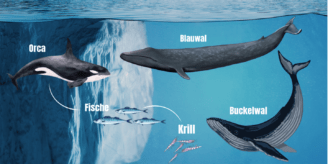
Insights into Marine Biodiversity Research – Lectures for Pupils
Two detailed presentations (held in German), developed by two young scientists, enable teachers to find an exciting introduction to the topic of marine biodiversity with their pupils. Specifically, they deal with whale research, the food web in the Antarctic and the special ability of whales to hear and utilise sound waves.
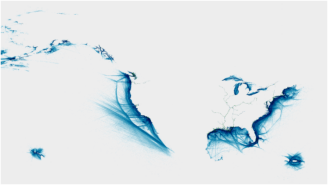
The Ocean – an Empty Space?
The ocean is most often seen as an empty space, for example in maps, where it is most often depicted as a blue shaded area next to colorful lands, mountains and valleys, forests and deserts, towns and roads. This is due to the traditional approach to creating maps and thinking about landscape (the clue is already in the term), people going as far as they can and writing about the things they find. The ocean in contrast is an inhospitable place to wander for humans, only with the aid of devices such as boats it becomes possible to leave the shore, creating the image of a vast desert in our minds.
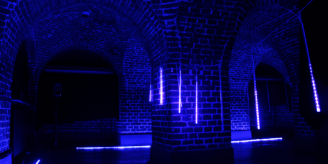
Mirrors – Following the Acoustic Journey of the Minke Whale
Mirrors is a sound installation that follows the acoustic journey of the Minke Whale as it travels from Antarctica to Namibia. A collaboration between artist-researcher Geraint Rhys and Marine Acoustic scientist Dr Ilse van Opzeeland it charts how the vocalizations of the Minke changes with a change in location as it migrates across the oceans.
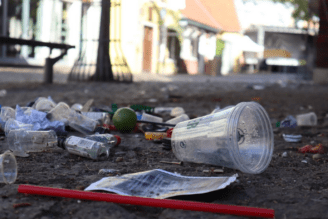
Unpacking Plastic Oceans – Placing Photography in Environmental Storytelling
This blog post is part of the ‘Plastic or Planet?’ blog series where we discuss the National Geographic exhibition ‘Planet or Plastic?’ hosted in Oldenburg during the summer of 2022. We are part of an interdisciplinary group of early career researchers working at the Helmholtz Institute for Functional Marine Biodiversity (HIFMB). Here, we focus on …
Activity Book on Deep Sea Mining
Deep-sea mining is a potential new industry in which non-renewable resources could be extracted from the bottom of the deep sea. However, as little is known about the ecosystems of these depths and the impacts of this industry, the prospect of mining these resources poses a great risk.