From tooth fish to food webs, from molecular genetic tools to underwater acoustics: dive into our current research
Topics
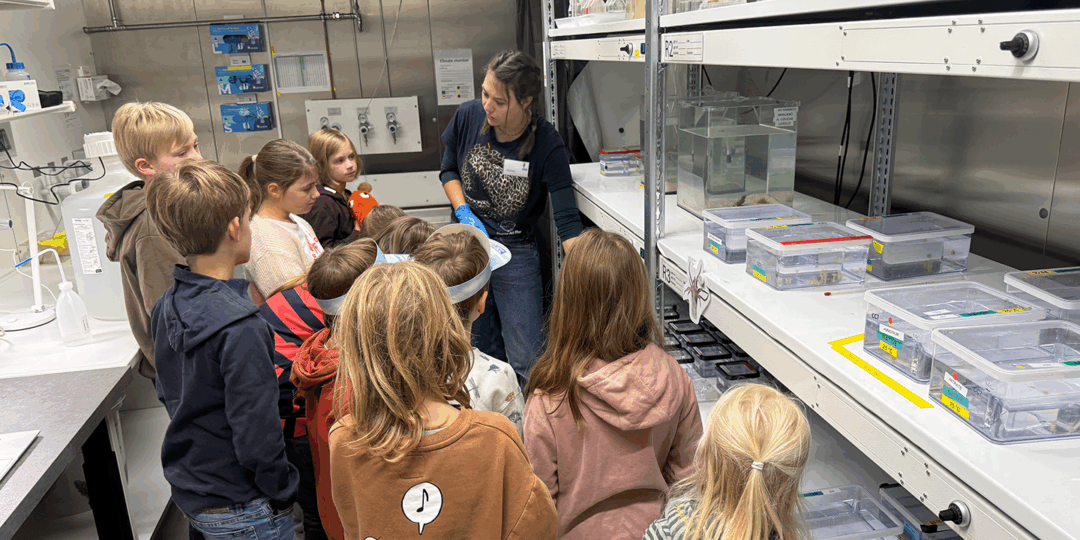
Diving in with “Die Maus”
“What do I have to study to work here?” a girl of about ten asks me, and I’m absolutely delighted, because it seems we’ve achieved what we set out to do: to show how exciting marine research can be and how much joy we find in it.
Did you know?
Unicellular plankton covers a size range that is comparable to the size difference between a small fish and a city like Oldenburg.

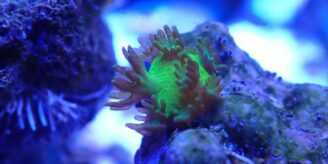
Southern Summer in a Retort
First successful sexual reproduction of South Sea corals in Germany – At the lab aquarium facility of the ICBM research group Environmental Biochemistry, headed by Prof. Dr. Peter Schupp, Dr. Samuel Nietzer and Matthew Jackson recently were the first in raising sexually reproduced offspring of stony corals in Germany. This marks a crucial step in their efforts for research on the conservation of reef corals.
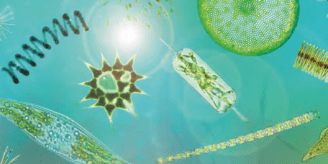
Importance of Shape and Form
It depends to a major degree on size and shape whether an organism manages to prevail in a given environment. A novel study took advantage from the exceptional diversity of shapes in phytoplankton to elucidate the relationship between evolutionary conditions, morphology, and taxonomic diversity.
Healthy Oceans Need Healthy Soundscapes
A global team of researchers has documented the pervasive impacts of noise on marine animals and ecosystems and identified actions to return to the soundtrack of the healthy ocean. Rain falls lightly on the ocean’s surface. Marine mammals chirp and squeal as they swim along. But the soundtrack of the healthy ocean no longer reflects the acoustic environment of today’s ocean, plagued with human-created noise.
A Marine Political Ecology Perspective
Only within the last couple decades have social science and humanities scholars intentionally taken their disciplines offshore and into the depths of the sea. Academic and policy circles now recognize the justification for interdisciplinary ocean research. Such efforts have brought attention to the ocean’s importance to every aspect of our lives. This turn has not …
Value of Information – Ecology Meets Economy
In our new joint research project with The Faculty of Business Administration and Economics of Bielefeld University both parties combine their expertises to explore the possible value of (additional) information and its consequences for optimal decision making in the context of ecological-economic problems.
A Better Future for Ocean Ecosystems
Marine conservation research is at a watershed moment. Human activities are impacting coastal and ocean ecosystems to a greater degree and at faster rates than ever before in human history. Understanding these impacts and developing effective marine conservation strategies to address them requires leveraging all the tools of ecology as well as other natural and social science disciplines.