From tooth fish to food webs, from molecular genetic tools to underwater acoustics: dive into our current research
Topics
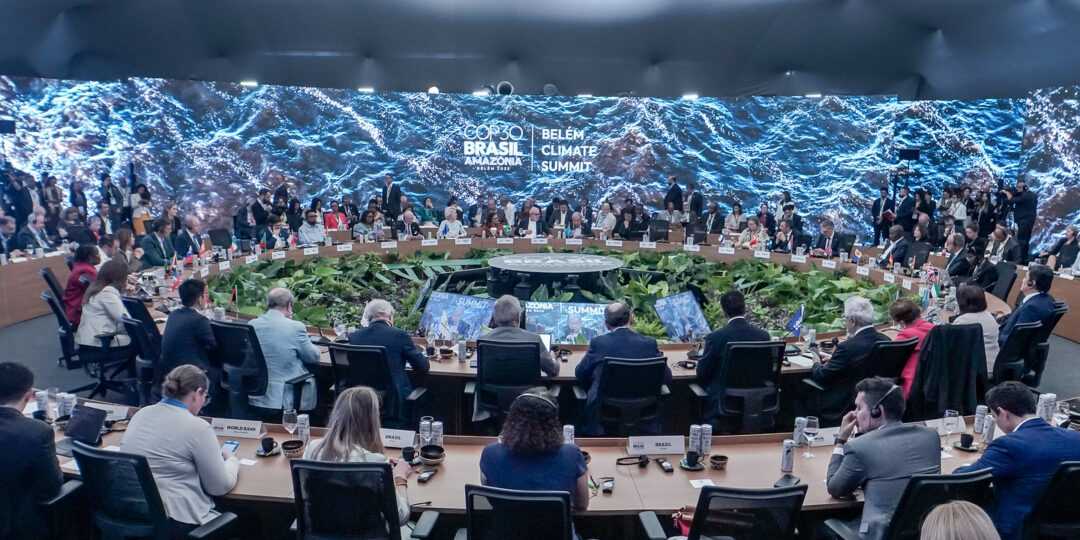
HIFMB at COP30 – BioAgora: Bringing Ocean Science to Policy
At COP30 in Belém, Brazil, Dr. Josie Antonucci di Carvalho from the Helmholtz Institute for Functional Marine Biodiversity (HIFMB) will highlight Europe’s efforts to bridge science and policy for marine biodiversity.
Did you know?
Unicellular plankton covers a size range that is comparable to the size difference between a small fish and a city like Oldenburg.


Polar Sounds: Remixing the Sounds of the Arctic and Antarctic Seas
Acoustic Data in Marine Research – Out of all the senses, sound is the one that travels the furthest in the oceans. Because of this, acoustic methods are becoming a critical tool that scientists at the HIFMB and the Alfred Wegener Institute, Helmholtz Centre for Polar and Marine Research (AWI) are using to better understand the Polar seas and the marine biodiversity within.
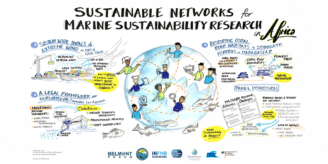
Sustainable Networks for Marine Sustainability Research
Marine spaces are more threatened than ever by various factors, such as the consequences of climate change, overfishing and geopolitical conflicts. Innovative and co-designed research approaches are essential to understand the threats and their impacts, and to find sustainable solutions. But future co-designed and co-created innovative and successful research will not be possible without sustainable and well-functioning networks.
Spatialising Approaches to Marine Governance
This year has marked an exciting time for the Marine Governance Group at HIFMB, one of the core groups of the institute, feeding one of the key pillars of research: conservation and management. New staff at PhD and Postdoctoral level have arrived and Masters students have begun to undertake original research projects. Together they (we!) have been quickly shaping the group, raising critical questions about governing ocean spaces.
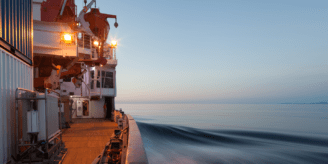
57 Days on Board the Polarstern
Bio-acoustician Irene Roca is a postdoctoral researcher at HIFMB. In March and April 2022, she takes part in a research cruise of the FS Polarstern through the Southern Ocean. The expedition starts in Capetown, traverses the Weddell Sea and ends in Punta Arenas in Chile. Logo of the Polarstern expedition “PS129” The mission of the …
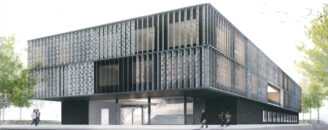
Our New Home under Construction
A three-story building with almost 2,000 square meters of floor space will be built by 2023. In addition to 85 office workplaces, the building will also offer around 650 square meters of laboratory space, creating the best conditions for marine biodiversity research.
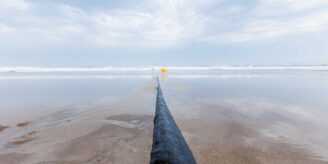
Undersea Cables: A Reminder for the Highly Wired World and Political Creatures
Lately, people worldwide have been caught off guard from hearing the news about the volcanic seamount eruption in the Tongan sea. This eruption caused tsunami waves—sweeping the Pacific Islands, including Tonga Island. This pacific island nation also suffers from fiber optic cable malfunctions laying on the seafloor, often undisturbed by human activities.